
What to Do in San Pedro de Atacama, Chile
Most travelers who want to explore the Atacama Desert make the town of San Pedro de Atacama their base camp. We’ve covered a wide range of Atacama Desert tours in previous posts. Now, it’s time to tell you what do in San Pedro de Atacama including visiting the ALMA Observatory, local museum highlights, the second-oldest church in Chile, and more.

Atacama Desert scenes like this draw travelers from around the world to the town of San Pedro de Atacama.

Where is San Pedro de Atacama?
San Pedro de Atacama sits in a natural depression that stretches more than 100 miles (160 km) between the volcanic peaks of the Andes to the east and the Cordillera del Sal (Salt Range) to the west. The town is surrounded by the Atacama Desert including the Salar de Atacama which is Chile’s largest salt flat.
The location is spectacular, but San Pedro de Atacama itself does not make the best first impression. Like most towns in or near natural wonders–in this case, the Atacama Desert which is one of the largest, highest, and driest deserts on earth–San Pedro de Atacama has gotten fat and sassy off of tourist dollars. This is not surprising since this tiny, high-altitude oasis town (population around 5,000) is the only adventure base camp for anyone who wants to explore the salt flats, wildlife, hot springs, and landscapes of the Atacama Desert in northern Chile.
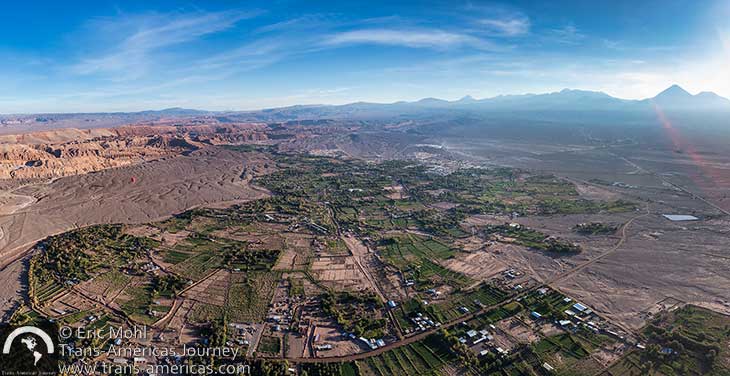
The oasis town of San Pedro de Atacama as seen from above.
Like a desert version of national park gateway towns in the US, this dusty, ramshackle place can look and feel like one big rip-off. Every other storefront seems to be a tour company, each touting the same trips. Hotels charge incredible rates for dreary shoeboxes. And restaurant menu prices this high would not be tolerated in most other parts of Chile.
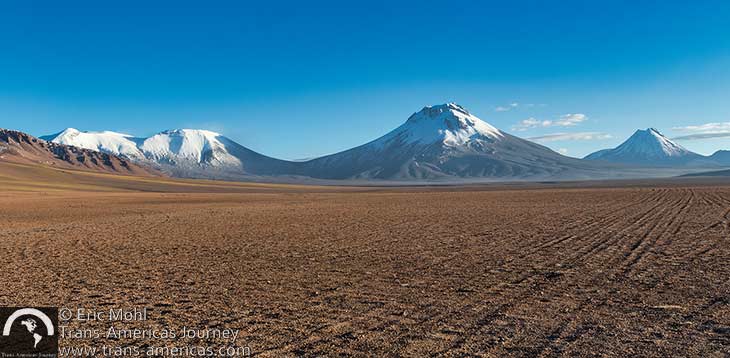
Volcanoes ring the town of San Pedro de Atacama.
We spent 42 days in San Pedro during visits in 2017 and in 2024 during which time we enjoyed many active tours in San Pedro de Atacama and also many easy tours in San Pedro de Atacama.
Now it’s time to tell you what to do in San Pedro de Atacama town itself.
What to do in San Pedro de Atacama
The Atacama Desert is the main draw, but here’s what to do in San Pedro de Atacama town and nearby areas.
Check out Iglesia de San Pedro
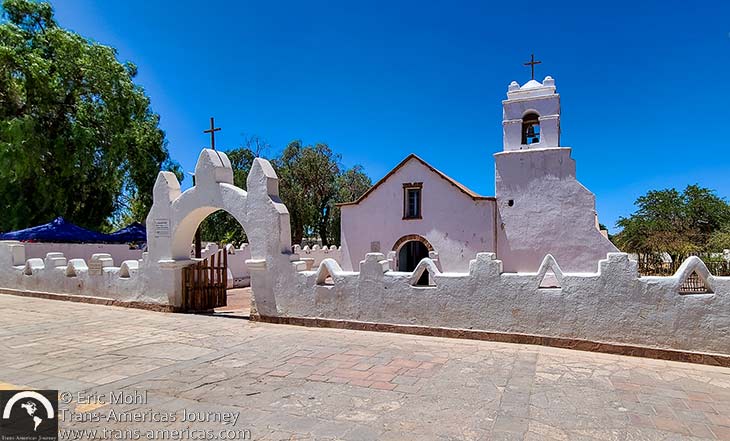
Visit Iglesia San Pedro to see what is believed to be the second-oldest church in Chile.
Stroll along Caracoles Street
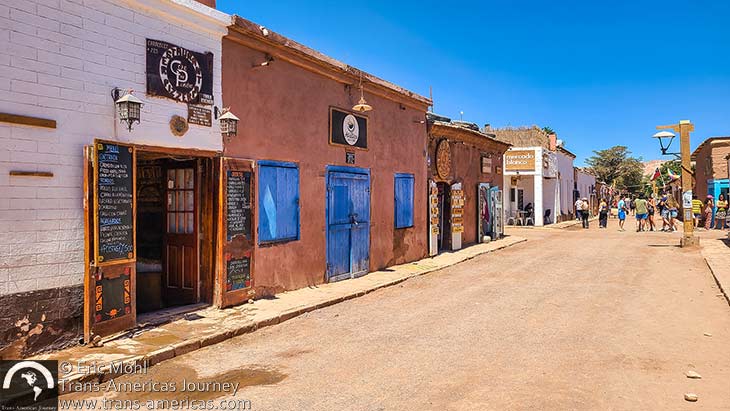
Caracoles Street is a pedestrian-only thoroughfare lined with tourist-centric shops and services.
Visit the Meteorite Museum
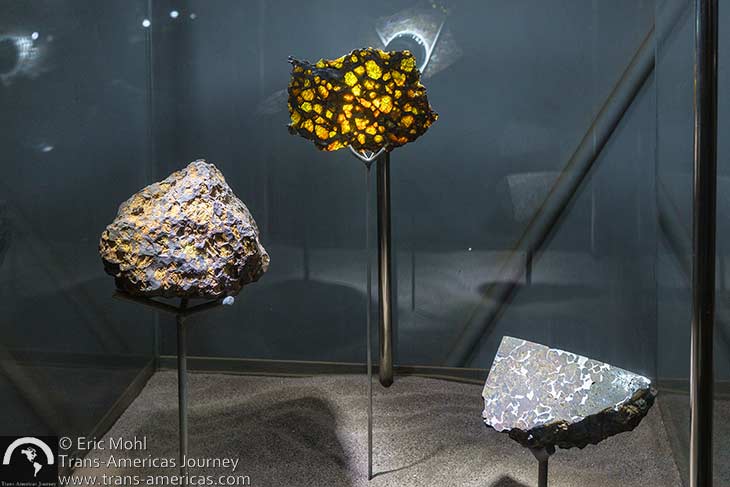
The Meteorite Museum in San Pedro de Atacama has a world-class collection.
Visit the Museo R.P. Gustavo Le Paige
Since 2015, a tangled and heated struggle over the future of nearly 400,000 pre-Columbian artifacts found in the Atacama Desert has been slowly playing out. The Chilean government, which wanted to build an ambitious museum facility to show off the world-class collection, was on one side. Members of local Indigenous groups, who wanted the relics of their ancestors to be re-buried in the Atacama Desert, were on the other.
In 2017, we met the museum director who showed us a few of the tens of thousands of amazing artifacts–each incredibly well preserved in the cold, dry conditions of the Atacama–in a storage facility where they were being protected pending a resolution between the parties.
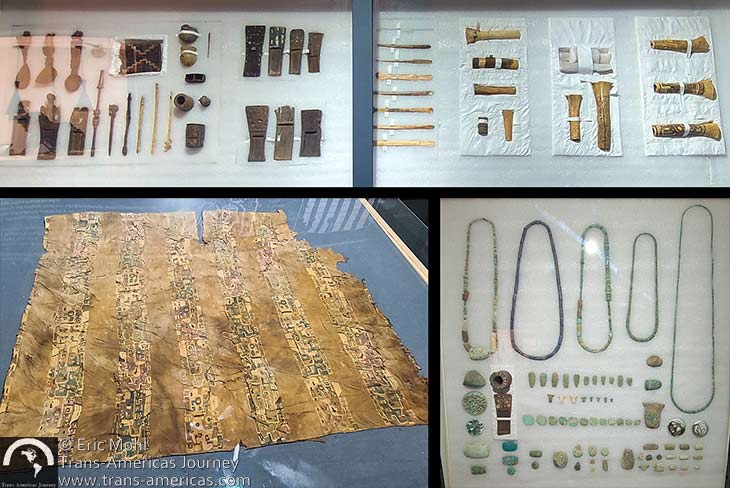
Selections from a massive collection of Indigenous items are on display at the Gustavo Le Paige Museum in San Pedro de Atacama.
Go shopping
San Pedro is full of stores selling cheap mass produced crap. For high-quality handmade finds, head for a shop called Chañar on Domingo Atienza Street just off Caracoles Street. Here you’ll find a wide array of true local handicrafts including pottery, paintings, jewelry, and more. And if you find yourself in need of boots or a jacket or other outdoor gear, a few stores in San Pedro sell international name-brand and local name-brand outdoor clothing and gear.
Visit the ALMA Observatory
The Atacama region of Chile is world-famous as a dark skies nirvana where thin high-altitude air, very low humidity, and almost no light pollution combine to create ideal conditions for sky watching and astronomical observation and study.
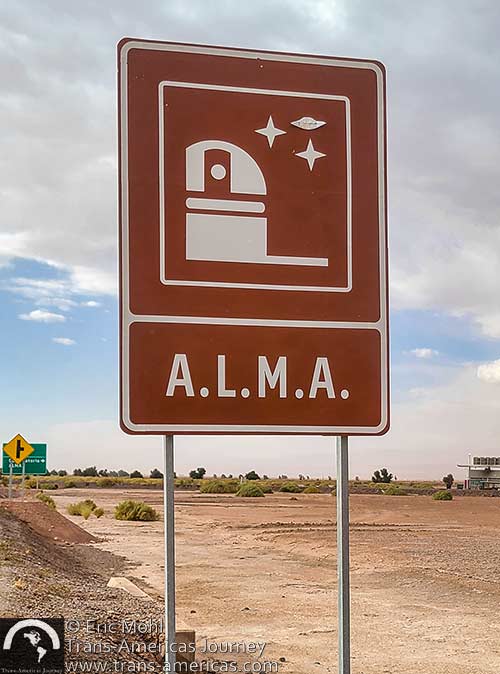
Note the flying saucer addition that someone made in the top right portion of this sign marking the entrance to the ALMA Observatory.
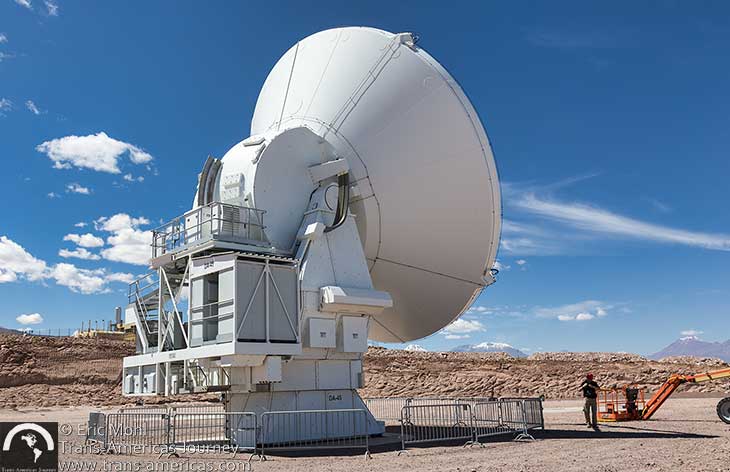
One of the 66 massive radio antennas at the ALMA Observatory near San Pedro de Atacama.
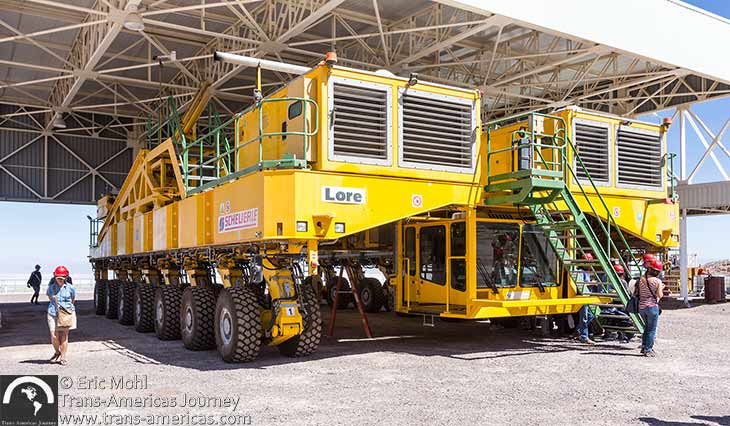
Each massive antenna at the ALMA Observatory requires a massive vehicle to move it around.
The giant machines at the ALMA Observatory are radio telescopes. Unlike telescopes like Hubble, which focus on light areas of the sky such as planets and stars which they can photograph, the radio telescopes at the ALMA Observatory are “big ears” that focus on dark sky areas of space. By training all of the ALMA radio telescopes on a single point in the universe, their receivers can “capture and concentrate the cosmic signals” so that scientists can listen to space.
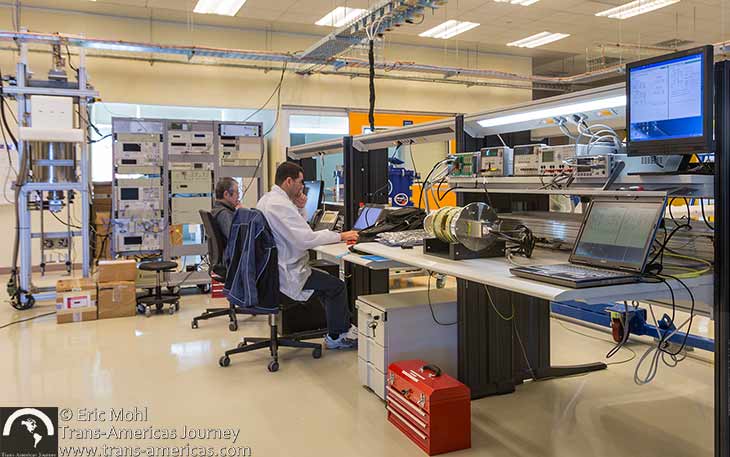
Scientists from around the world come to the ALMA Observatory to study the sky.
Every three months the positioning of ALMA’s antenna is changed during a weeks-long process to adjust each antenna. Though each antenna is only 40 feet (12 meters) in diameter, they can be positioned in close proximity or spread out over up to 8.6 miles (14 km) to create what amounts to an 8.6 mile (14 km) wide antenna.
In 2017, we took the free public tour of the ALMA Observatory which included transport from San Pedro de Atacama (private vehicles were not allowed on observatory grounds), a guide (Spanish or English), a short video (with English subtitles), a walking tour around some of the exterior facilities, and a guided tour through parts of the offices and interior research facilities (where we were delighted to note that even astrophysicists struggle to fix the copy machine).
Note: public tours of the ALMA Observatory were halted after a ransomware attack on the facility in late 2022 and had not resumed as of this writing.
Explore the night sky on an astronomy tour
If stargazing through a telescope is more your brand of astronomy you’ll find many opportunities for star gazing and night sky tours in San Pedro.
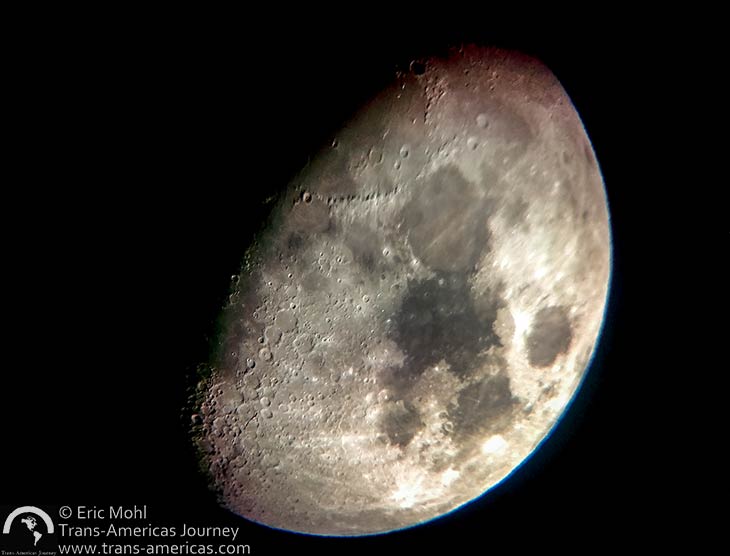
The moon seen through a telescope in San Pedro de Atacama.
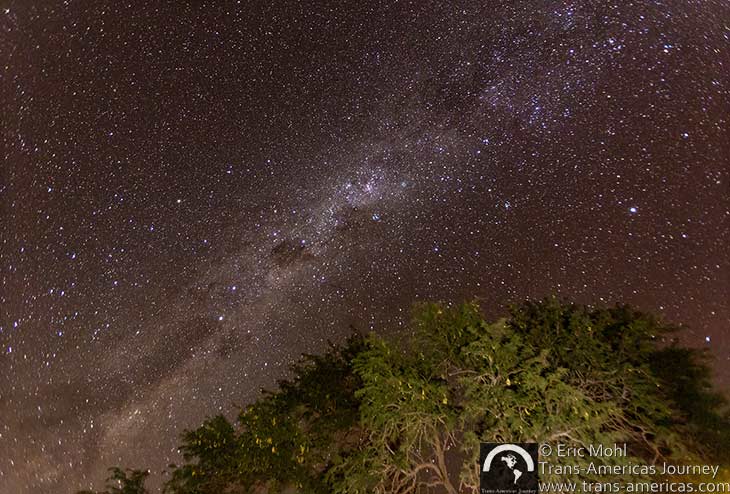
The Milky Way is visible even without a telescope in the ultra-clear skies above San Pedro de Atacama.
Witness a festival
If you’re in San Pedro in late January/early February you may also have the chance to catch local dance groups in traditional costumes celebrating in the street as part of the Virgin of Candelaria Festival. This annual event is a big deal in most parts of Latin America, however, in small San Pedro the scene is more relaxed and crowds are smaller–though participants are no less dedicated.
Check out some of the Virgin of Candelaria Festival activities in San Pedro de Atacama in our video, below.
Similar festivities can be seen in San Pedro de Atacama during Carnival as well.
Wine tasting on the Ruta del Vino
We were as surprised as you are to learn that wine is being made in the Atacama Desert and even more surprised when we learned about a recently created ruta del vino (wine route) experience that gives visitors a look at vineyards and the winery where this Atacameñan wine is being made from grapes grown by a small band of wine pioneers from the Indigenous Lickanantay community.
Not only are these grape growers producing tasty wine varietals, they’re doing it in some of the highest vineyards in Chile located between 8,200 feet (2,500 meters) up to 10,499 feet (3,200 meters).
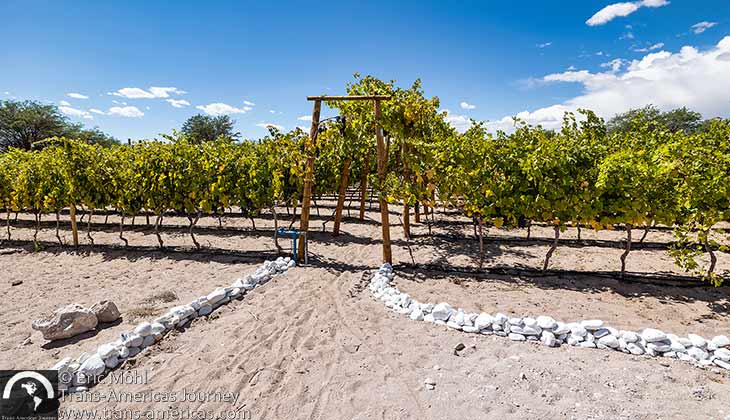
We’ve heard of sandy soil, but this is the first time we’ve seen wine grapes growing in desert terrain like the Atacama.
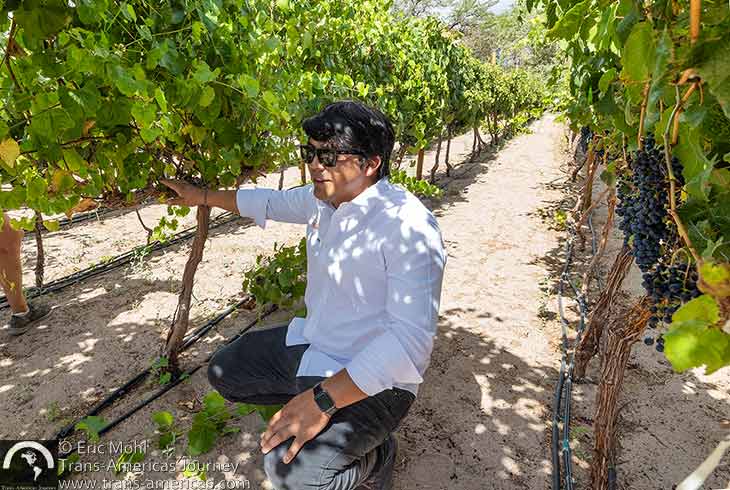
Ayllu’s agronomist checks out the vines and bunches at the Santi Romina vineyard near the town of Tocanao.
All grapes are also grown using biodynamic principles which puts a fitting emphasis on cycles of the moon and other celestial bodies here in a region famous for its dark skies and astronomical observation. These vines receive sun 360 days a year and growers and winemakers also credit nighttime moon bathing as an influence on their wines as well.
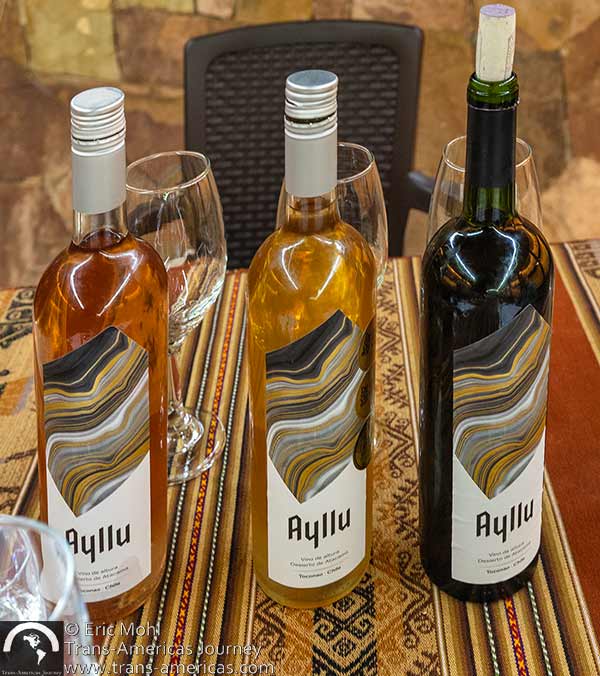
The Ayllu winery currently makes five wines under the Ayllu label from a range of varietals including syrah, petite verdot, cabernet sauvignon, pinot noir, sauvignon gris, moscatel de Alejandria, moscatel rosada, chardonnay, malbec, and garnacha. The winery also makes a red blend called Hallar. The first vintage of this limited edition wine was released in 2020 with 40% syrah, 40% petit verdot, 13% malbec, and 7% garnacha.
In 2019, Ayllu debuted a wine tourism program that includes a vineyard visit, a short tour of the simple winery, and a tasting of Ayllu wines in their facility in the town of Tocanao. During our tour, we visited the tiny Santi Romina on the outskirts of Tocanao where a small herd of llamas is used to clean the plots and prune the vines after each harvest. As we walked through vines we tasted grape varietals including petite verdot grapes which burst with intense chocolate notes. Each varietal we tasted was strikingly different from the same varietals grown in different environments and terroirs and this is why Ayllu says their wines deliver “the desert in a glass”.
Stop at the Tropic of Capricorn
The Tropic of Capricorn (aka Southern Tropic) and the Tropic of Cancer (aka Northern Tropic) mark the southernmost and northernmost latitudes on the planet where the sun can be directly overhead. Think of them as two belts that circle the earth with points marked in various countries that the belt passes through.
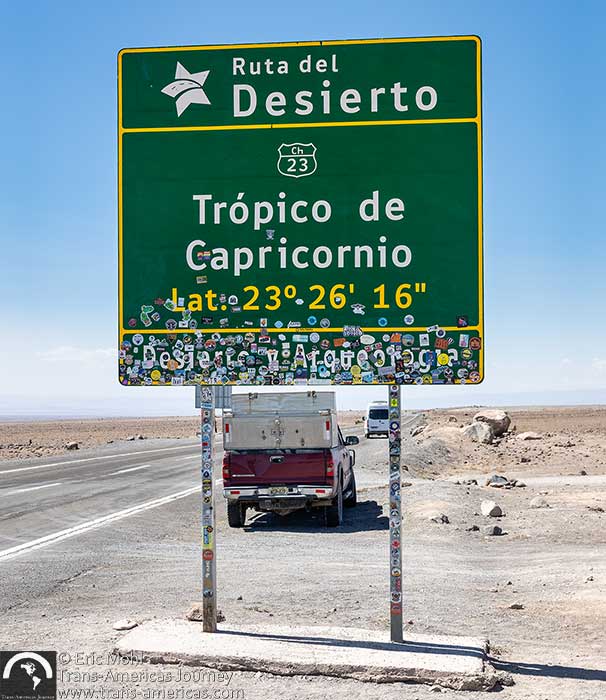
Look for one of our Trans-Americas Journey stickers on this sign marking the Tropic of Capricorn near San Pedro de Atacama.
Fun fact: When the Tropic of Capricorn was named, the sun was in the constellation of Capricornus (hence the name). However, the Tropic of Capricorn is moving slowly but surely north year by year, and now the sun is in the constellation of Sagitarrius.
Check out a Chilean rodeo
The nearby village of Solar is home to the Club de Rodeo where visitors can get a glimpse of Chile’s unique form of rodeo. Unlike rodeo in Mexico or the US, the Chilean version takes place in a circular high-sided wooden ring, but only half of it is used–hence the name: media luna (half moon). And Chilean rodeo has just one main event that involves two traditionally dressed riders (wearing traditional boots, pants, chaps, a stiff wide-brimmed hat, and spurs the size of salad plates) and one young bull (wearing a skeptical expression).
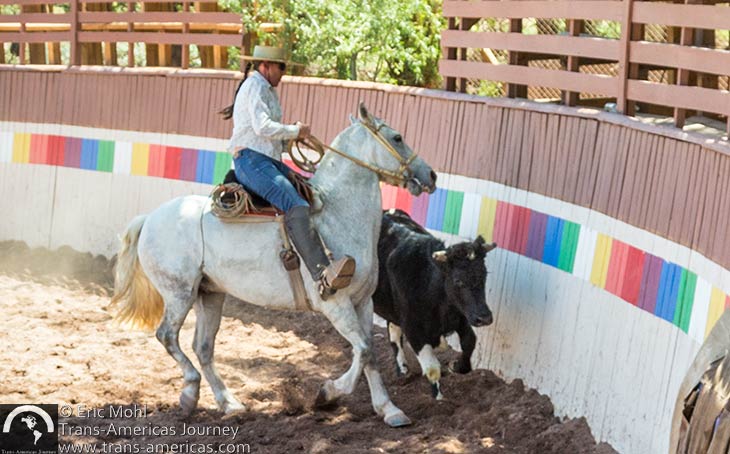
Karen tried her hand at the main event in Chilean rodeo and it’s even harder than it looks.
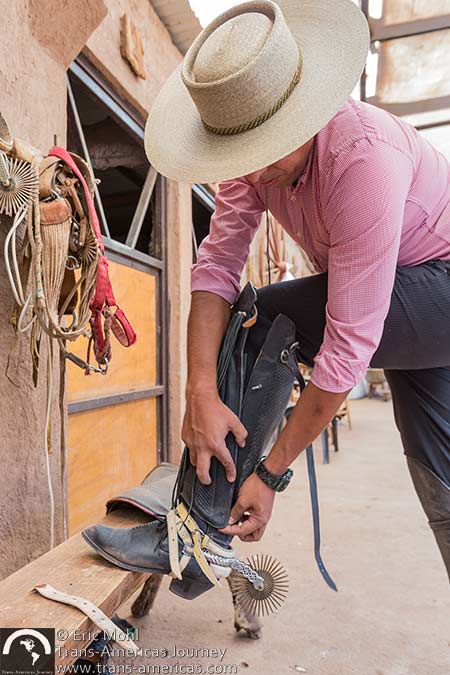
Traditional clothing and tack–including oversized spurs used to gently push a horse sideways–are required during Chilean media luna rodeo events.
See Karen in action in the media luna in Solar in our video, below.
The Club de Rodeo media luna in Solor is open to the public, but events are not held every day. Ask about upcoming rodeo events at your hotel or at your preferred local tour company.
Getting around San Pedro de Atacama
There is no comprehensive local public transportation in San Pedro de Atacama. Public buses run to and from the city of Calama, where the airport is located, but that’s pretty much it. Sites within town are easily walkable (town is tiny). Your options for reaching destinations further afield include booking tours through one of the tour companies in town which include transportation or renting a car or a camper in Calama or in San Pedro de Atacama (reserve well in advance) and driving yourself around.
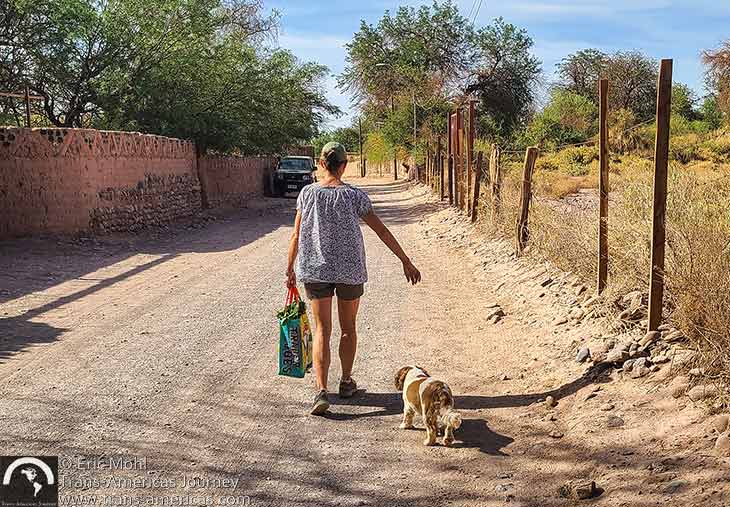
Karen headed back to our Airbnb on the hectic and bustling streets of San Pedro with our friend’s dog Charlie (very much NOT a stray) and the day’s grocery shopping.
San Pedro de Atacama stray dog warning
San Pedro de Atacama has a human population of around 5,000 and a stray dog population of around 4,500. You will notice stray dogs everywhere and, unfortunately, in recent years stray dog attacks on humans have been on the rise in San Pedro de Atacama. For example, in 2023, a female guide was killed during an attack and in 2024, a Brazilian tourist was badly injured by stray dogs. Town administrators are trying to get rid of the dogs, but as of this writing no official plan has been approved. Stray dog attacks tend to occur mostly at night, so be cautious and aware if walking the streets after sunset.
Here’s more about travel in Chile
Here’s more about Adventure Travel in the America




Thank you for providing this information; it’s exactly what I was searching for.
We’re so glad you found this information helpful and we hope you enjoy your adventures in Atacama!
Amazing guide! The landscapes in Atacama are unreal, and your suggestions make planning a trip so much easier. Thanks for sharing!