11 Posts About How to Travel to Rio de Janeiro, Brazil
We recently spent three months exploring Rio de Janeiro, Brazil. Now it’s time to tell you how to travel to Rio, including when to visit, the best things to do in Rio, getting around Rio, city quirks, city safety, and how to survive Carnival in Rio, plus where to eat, drink, and sleep in Rio. It’s all here.

Welcome to Rio de Janeiro, Brazil!

How to travel to Rio de Janeiro
The Marvelous City lives up to its nickname with friendly locals, a festive atmosphere, plenty to see and do, terrific food and drink, an unmatched mix of cultures, and its own Rio rhythm.
What do I need to know about Rio?
Everyone calls Rio de Janeiro simply Rio. People who live in Rio are called cariocas and, as the saying goes, “you can’t spell carioca without rio.” Cariocas are said to have gotten the nickname from an Indigenous word that means white house, a nod to the Portuguese royals who lived in fancy houses in Rio when they ruled Brazil.

A scenic street in the Morro da Conceição area of Rio.
The city got its name because Portuguese colonists arrived in January and promptly mistook Guanabara Bay for the mouth of a river. Rio means river in Portuguese and de janeiro means of January.
In 2012, the greater Rio area–from Tijuca National Park to the ocean–was collectively named a UNESCO World Heritage site.

The Portuguese Imperial Palace on Prac XV in Rio.
Rio is so big (nearly seven million people live within the city limits) and so complex that it’s almost a country unto itself. Motorcycles weave and beep through traffic. City sidewalks (miles and miles of them intricately laid with small black-and-white stones in a distinctly Brazilian style of sidewalk art called Portuguese Pavement) fill with cariocas, travelers, and cruise ship passengers (Rio is a popular cruise ship port of call).

Lovely Copacabana Beach.
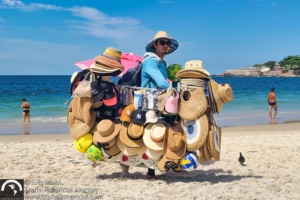
To really observe the melting pot of cultures that is Rio, head to Copacabana Beach. There, you’ll see people of all shapes, sizes, colors, and socioeconomic backgrounds mingling and mixing. This space is expressly for everyone, and it’s a lovely thing to behold. Our post about Copacabana Beach will give you a preview, including the many, many, many roving vendors on Copacabana Beach ready to sell you everything from a new bikini to a cold caipirinha to shrimp on a stick.
What Rio neighborhoods should I visit?
Rio is a sprawling city wedged between a meandering waterfront and sheer mountains and made up of distinct neighborhoods. Here are highlights from different neighborhoods in Rio. Of course, the city has many other neighborhoods. These are simply the ones with the most to offer visitors.

Rio seen from Sugarloaf Mountain.

The Lapa Arches in Rio.
Important Historic Sites in Rio can also be found in the Little Africa area of Rio, especially those related to the city’s long history with slavery. These include Pedra do Sal and the Cais do Valongo (Valongo Wharf), where up to a million enslaved Africans entered Brazil.

Inviting Praia Vermelha.
Botafogo, sometimes called Botasoho, is one of the oldest neighborhoods in Rio. These days, Botafogo is where many of the city’s newest and hippest places to eat in Rio and places to drink in Rio can be found.
Ipanema Beach is one of the Most Popular Attractions in Rio and home to one of our favorite Luxury Hotels in Rio.

A rare uncrowded moment on Copacabana Beach.
The Santa Teresa neighborhood of Rio, created as a haven for Rio’s elite who wanted to escape plagues and diseases that spread through the densely packed heart of Rio, is like a city within a city. This bohemian hillside enclave rising above Rio is home to historic mansions (many in need of some TLC), enticing neighborhood buteco bars, artist workshops, and winding cobblestone streets. Take the Bonde tram up from the Lapa station and wander the area.
Many neighborhoods are also home to street art, as you can see in our photo essay about street art in Rio.
Is Rio safe?
Like any major city, crime and violence happen in Rio. These problems are exacerbated by long-simmering conflicts between law enforcement and gang members and drug dealers in the city’s notorious favelas (though it’s important to remember that not all favelas are alike). That conflict does boil over at times, but usually in areas that tourists don’t visit.
Pickpockets are around in Rio as well, and cell phones and other valuables do get snatched. So it’s important to pack your common sense if you travel to Rio. Be aware of your surroundings. Don’t keep your cell phone in your hand on the street (if you need to use it, move to the doorway of a business away from street traffic). And never wear flashy jewelry.
What are the best things to do in Rio?
We spent three busy months in Rio, and we still didn’t see and do everything in the city.

The Christ the Redeemer statue looks down on the city of Rio.
The most popular attractions in Rio
13 unexpected things to do in Rio
Where to eat in Rio de Janeiro
Where to drink in Rio de Janeiro
Luxury Hotels in Rio de Janeiro
Your shopping and sunning guide to Copacabana Beach
Photo essay of street art in Rio de Janeiro
What is Carnival in Rio like?
Every year, Rio puts on the most famous Carnival celebration in the world. It’s a massive, pride-filled, elaborate week-long celebration that many cariocas spend all year preparing for.
Check out the sounds, colors, lights, and precision of the Beija-Flor samba school procession in the Sambadrome during Carnival 2025 in Rio in our video, above. You can also watch our videos of processions from the Tijuca Samba School, and the Salgueiro Samba School.
Tens of thousands of visitors fill the city. Street parties erupt all over town. Celebrating happens day and night. After experiencing our first Carnival in Rio, we shared tips about how to survive and thrive in our First-Time Guide to Carnival in Rio for Lonely Planet.
Where should I eat in Rio?
Cariocas love to eat. In fact, it seems like most graze their way through the day. This means that Rio is full of restaurants, from cheap butecos serving traditional snacks and bites, to Michelin-star tasting menus, as we reveal in our post about where to eat in Rio.

Visitors to Rio will not go hungry.
Where should I sleep in Rio?
There are many accommodation options in Rio, including Airbnb, which we used during most of our time in Rio (see our Airbnb tip, below).

A room in one of our favorite luxury hotels in Rio.
Airbnb travel tip in Rio
If you’re booking an Airbnb in Rio, check the “read more” section at the bottom of the listing to read the complete house rules. This is where you will find any fine print about electricity use during your stay. Because electricity is expensive and in Rio it’s often necessary to use the air conditioning, some listings cap electricity use with the renter paying the difference.
How can I get around Rio?
Rio is served by public buses and a subway system called the Metro. Get a refillable purple Rio Mais card, sold in Metro stations, to ride buses and the Metro. City buses in Rio will also take reais. Foreign credit and debit cards are not accepted on city buses in Rio. Uber is also available in Rio and is often cheaper than taxis.
When should I visit Rio?
Seasons in South America are opposite those in the northern hemisphere, so when it’s winter in North America and Europe, it’s summer in South America. Peak season for travel to Rio is December to March, when the weather is hot and sunny and Carnival and New Year’s Eve celebrations are in full swing. July is usually the coldest month, but temperatures in Rio rarely dip below 74 degrees Fahrenheit (23 Celsius). Shoulder season in Rio, with cooler temps and fewer travelers, is April and May or September through November. It’s almost always quite humid in Rio as well, though there’s usually a somewhat refreshing coastal breeze.

Copacabana and Ipanema are far from the only beaches in Rio and many other beaches, like this one in the Urca neighborhood, are less hectic
Is Rio expensive?
Brazil is a very large country with a very large population and a very large economy that functions well and is stable overall. Prices in Rio are, generally speaking, higher than prices in neighboring countries, especially when those countries, such as Argentina, are experiencing economic downturns that benefit travelers with US dollars or euros.
More money tips in Rio
ATM tip: When using your foreign debit card at an ATM in Brazil, always decline the initial offer of a Brazilian bank exchange rate. It may seem as if you have to accept, but you don’t and this rate is usually below the official exchange rate. You will get a better rate by declining that first offer because your bank will debit your account at a rate much closer to the official exchange rate, which means more reais for you.
Credit card tip: When paying with your credit card, a screen will come up that allows you to choose to pay in Brazilian reais or your home currency. If your credit card does not charge a foreign transaction fee, always choose to pay in reais (not your home currency). This will save you money because your transaction will bypass local banks, which will process your transaction at a lower-than-official rate, and go straight to your home bank, which will process your transaction at an exchange rate much closer to the official rate.
Here’s more about travel in Brazil
See all of our City Travel Guides