Exploring the “Secret Galapagos” in Patagonia – Bahia Bustamante, Argentina
Bahia Bustamante, in the Patagonia region of southern Argentina, offers history, coastal landscapes, wildlife of all sorts, the best petrified forest we’ve ever seen, and one of the most unique vineyards in all of Argentina. Here’s why you should spend a few days exploring this wild and welcoming place that’s been called a “secret Galapagos”.
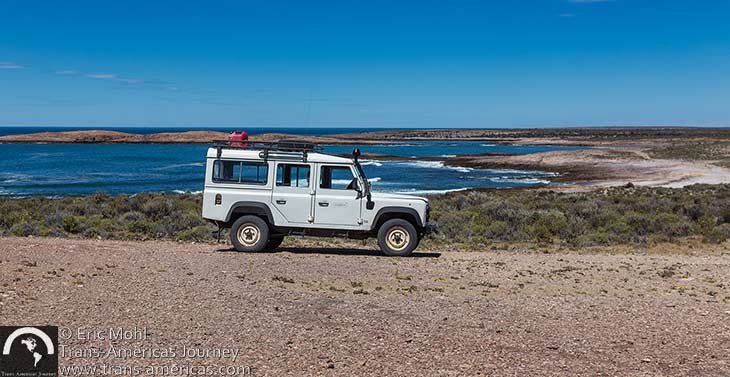
Wildlife, wild views, and outdoor adventure await at Bahia Bustamante in the Patagonia region of southern Argentina.

Bahia Bustamante: From seaweed city to secret Galapagos
Like many immigrants in the 1900s, Lorenzo Soriano made his way from Italy to Argentina. He eventually began making a hair cream that required an imported emulsifying element. When that ingredient became unavailable, Lorenzo headed south in search of seaweed that could be processed as a substitute emulsifier.
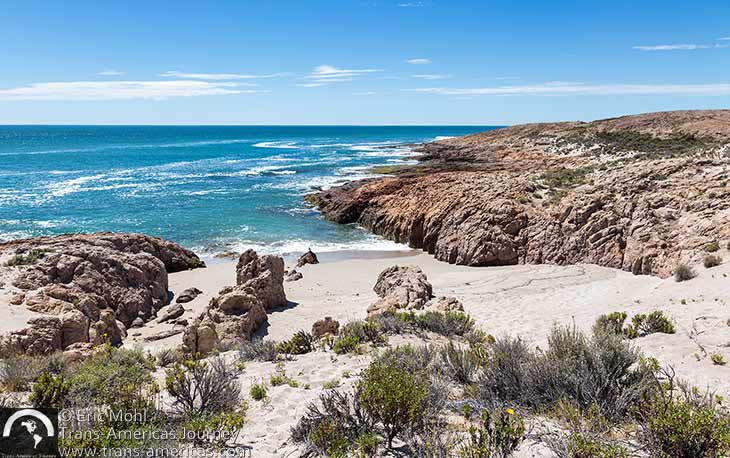
One of many scenic beaches and coves you’ll find along the coastline that’s protected within the Bahia Bustamante property.
The bay was surrounded by massive sheep farms that produced export-quality merino wool, which was the dominant agricultural product at the time. But Lorenzo turned his attention to the sea and began developing a seaweed-harvesting business.
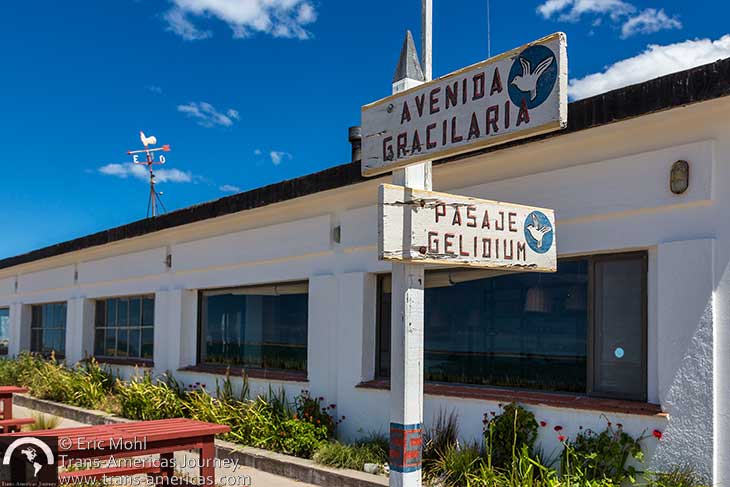
Original street signs were put up during the property’s seaweed harvesting days to give the town’s dusty lanes the names of different types of seaweed.
Then the Argentine economy went bad. Then Lorenzo made a dredging mistake that yanked a lot of seaweed out by the roots. Then the seaweed business failed.
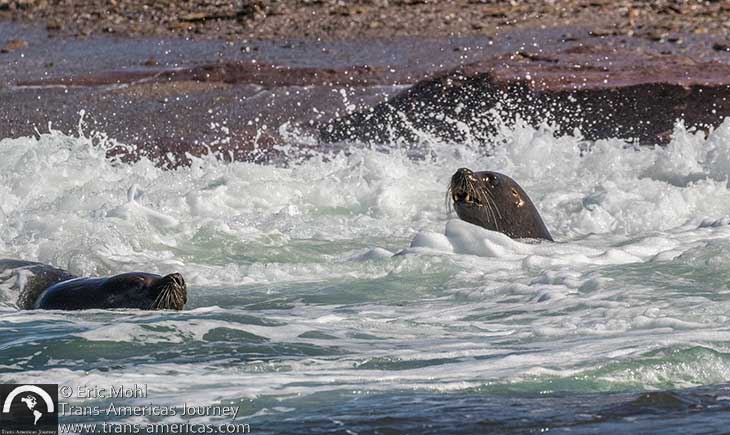
Frolicking sea lions.
More importantly, Matias has a deep commitment to protecting the land and marine environments of Bahia Bustamante, and it’s working. Since opening as an eco-tourism destination, Bahia Bustamante has been called a “secret Galapagos”.
After multiple visits, we know the famous Galapagos Islands in Ecuador very well and, honestly, we have yet to find any other place on earth that truly rivals the original Galapagos Islands. However, Bahia Bustamante offers an exhilarating density and variety of wildlife and stunning natural beauty that will thrill any nature-loving traveler.
In 2008, Bahia Bustamante was included in the first Marine National Park in Argentina. In 2015, Bahia Bustamante was included within the Patagonia Azul Biosphere Reserve, a UNESCO initiative that protects 7.7 million acres (3.1 million hectares) of land (42% of the reserve) and sea (58% of the reserve).
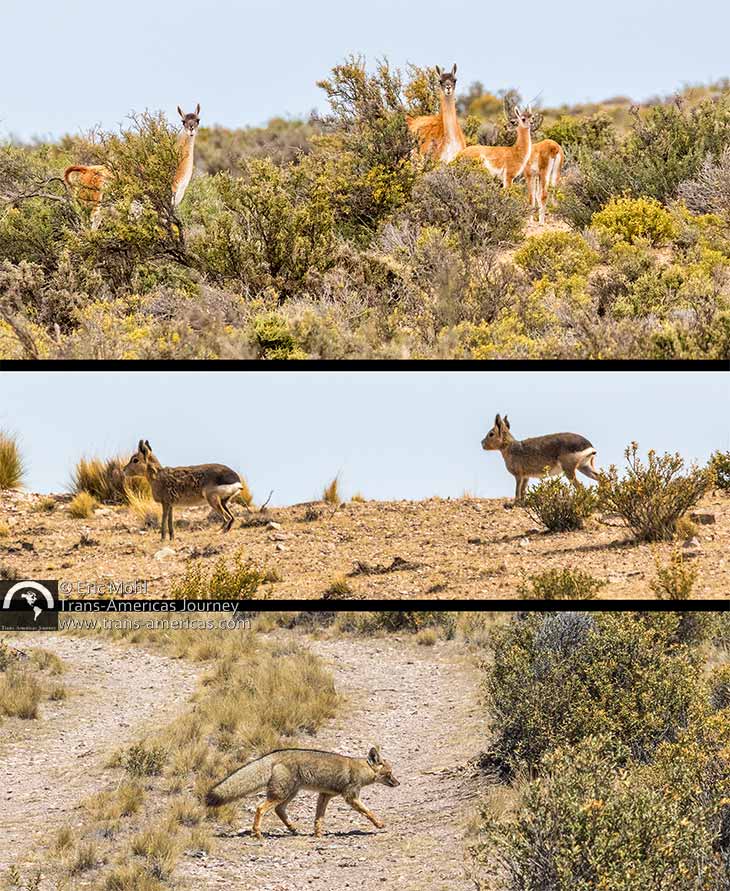
Top to bottom: Guanacos (the wild cousins of llamas), mara (which must have been the models for the jackalope), and a lone grey fox, all seen at Bahia Bustamante.
What to do at Bahia Bustamante
Guests of Bahia Bustamante Lodge have a wide range of activities to choose from, all scheduled based on tides, weather, and Matias’ knowledge of the land and its wild inhabitants.
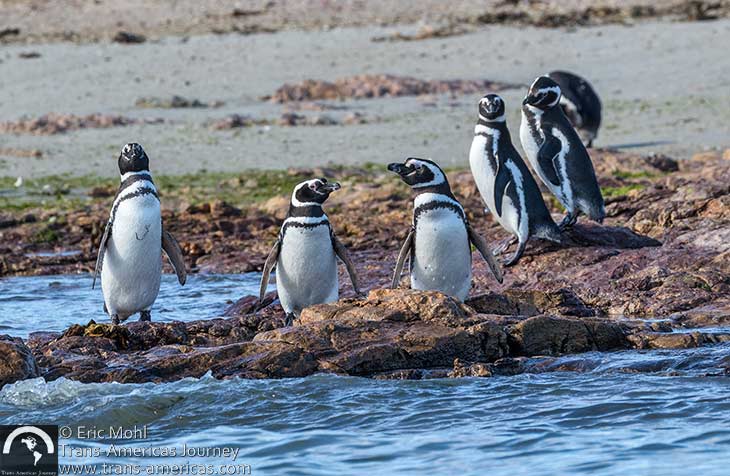
Magellanic penguins return to Bahia Bustamante every year during mating season and guests can see them during a visit to Penguin Island.
See thousands of Magellanic penguins
Of the 16 seabirds that breed on the Argentine coast, 13 of them choose Bahía Bustamante as a nesting site. This includes Magellanic penguins. While there are many places to see penguin rookeries in the southern reaches of Argentina and Chile, few of them offer the chance to have the rookery to yourself. But because Penguin Island is only open to guests of Bahia Bustamante Lodge, your group may be the only humans there. This was the case when we visited Penguin Island.
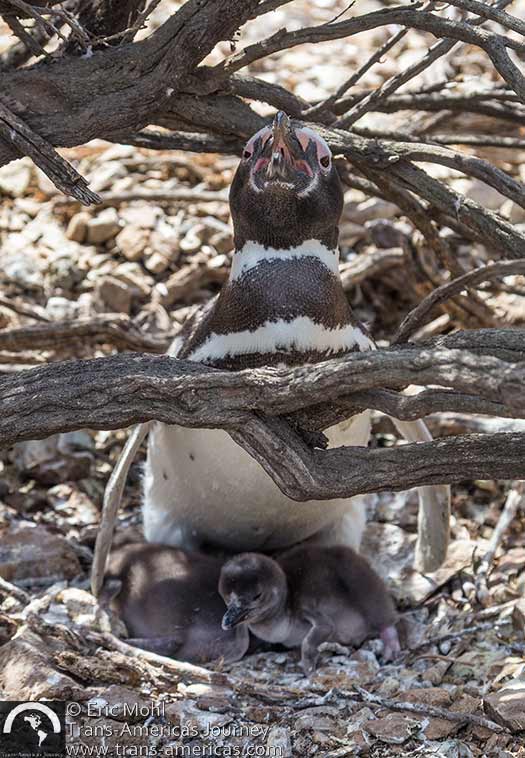
New chicks and an anxious parent on Penguin Island.
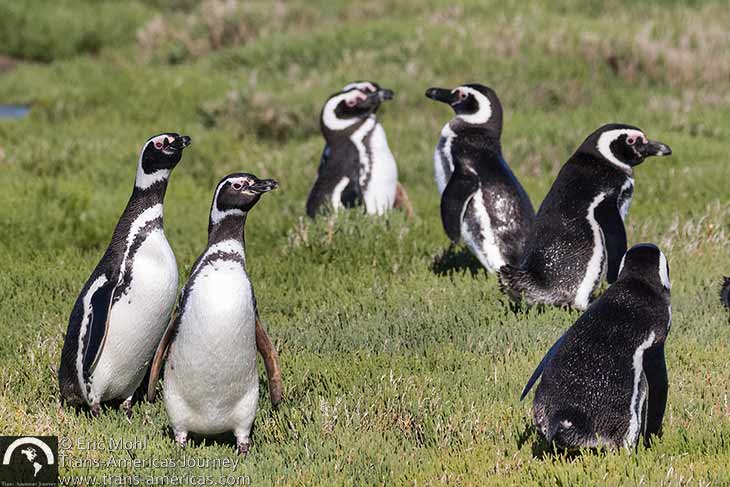
As many as 100,000 Magellanic penguins nest on Penguin Island within the Bahia Bustamante property.
Cruise the coastline
On days when winds are low and seas are calm, boat trips are offered, sometimes with Matias at the helm. These trips are a great way to cruise the coastline and pass islands to spot land animals and marine animals.
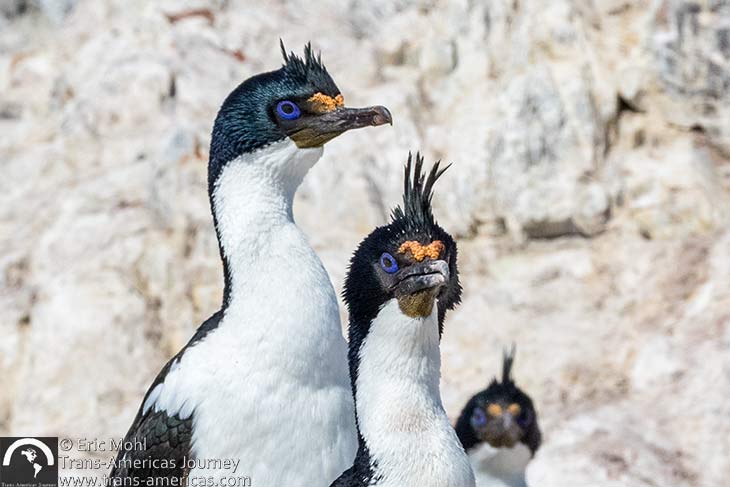
Spectacular imperial cormorants are often seen during tours around Bahia Bustamante.
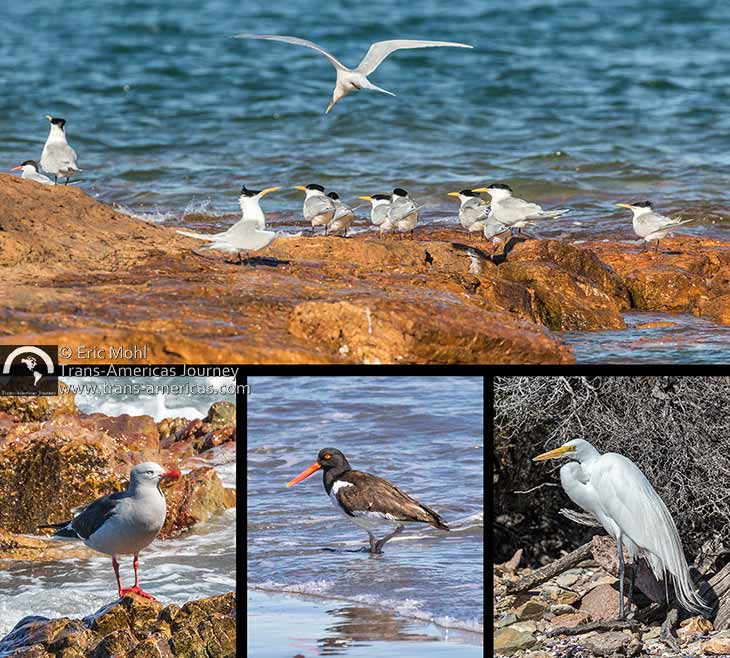
Many seabirds can be spotted, including royal terns (top), dolphin gulls (bottom left), Magellanic oystercatchers (bottom middle), and great egrets (bottom right).
4X4 in search of culture and wildlife
One day, we scrambled into a 4X4 vehicle and set out to explore Cabo Aristizábal within the Bahia Bustamante property. A highlight was the chance to walk through an area covered in shells. Matias explained that the spot is an active archaeological site where experts believe original nomadic inhabitants harvested and ate shellfish, leaving behind the empty shells–and rudimentary tools, including modified petrified wood and stones. History was literally crunching under our feet.
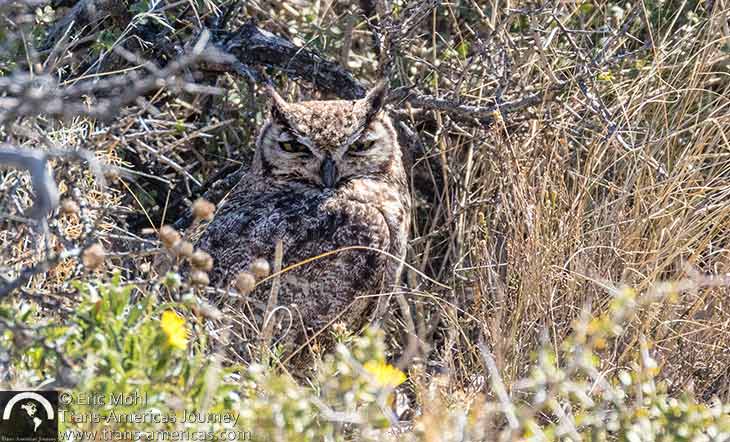
A lesser horned owl that we spotted during a tour at Bahia Bustamante Lodge.
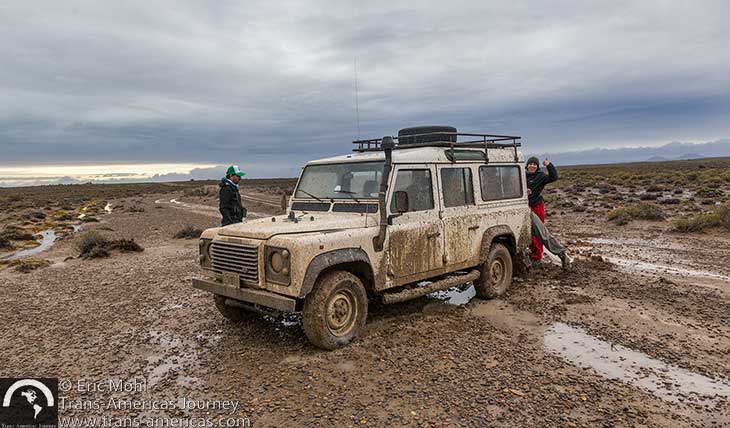
An afternoon rain storm added extra adventure to our 4X4 tour of Bahia Bustamante.
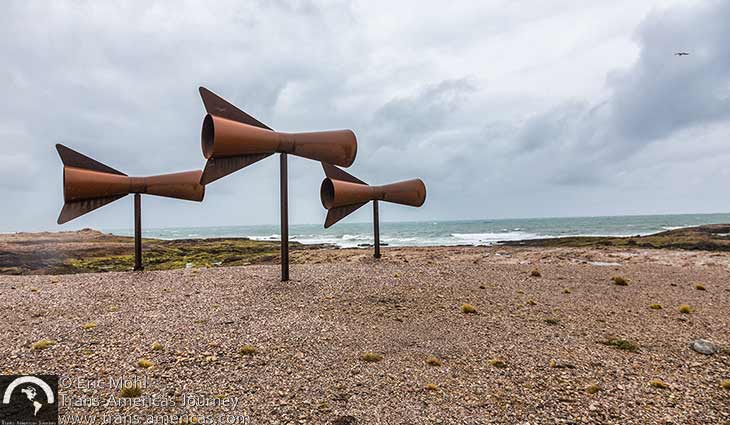
This sculpture, from French artist Christian Boltanski harnesses the abundant Patagonian wind to produce sounds that mimic whale calls.
Explore an epic petrified forest
The petrified forest located 11 miles (18 km) from Bahia Bustamante Lodge is estimated to be more than 60 million years old. Unlike most petrified forests, which are operated as parks that are open to the public, this one is private. This means no crowds and, more importantly, no pilfering.
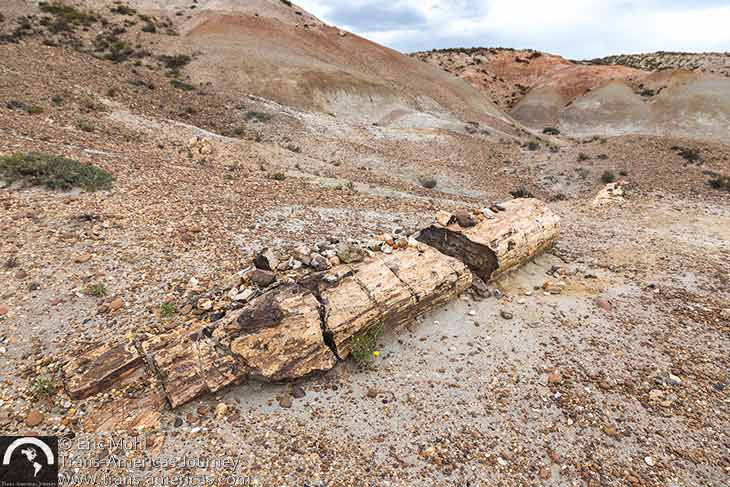
The petrified forest near Bahia Bustamante Lodge is full of ancient trees and tree fragments like this tree trunk.
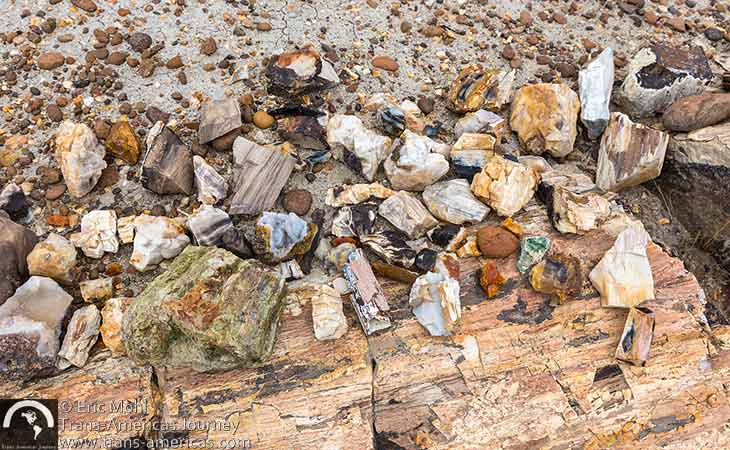
During the course of 60 million years, natural minerals have created gem-like colors in some fragments in the petrified forest.
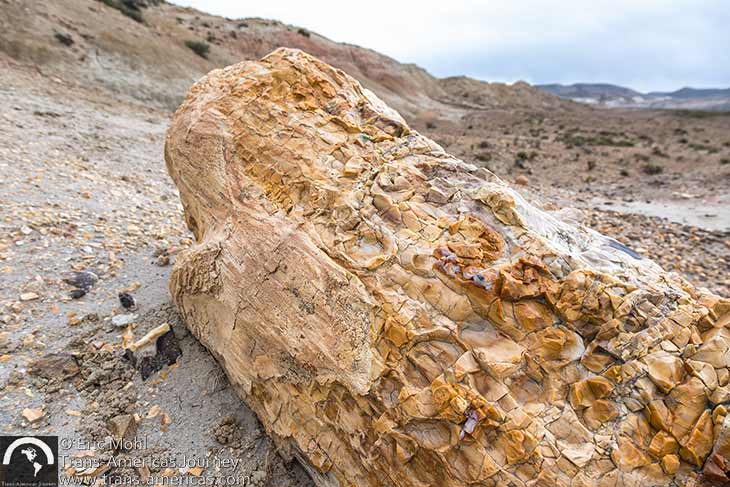
Fragments like this make the petrified forest near Bahia Bustamante Lodge a must-visit.
Want more? Swimming, bird watching, tide-pooling, horseback riding, hiking, trekking, mountain biking, and sheep ranch and farm visits can also be arranged.
Don’t miss sunrise and sunset
Sunsets turn the sky above Bahia Bustamante Lodge pink, but it’s the sunrise over the water that we found most spectacular.
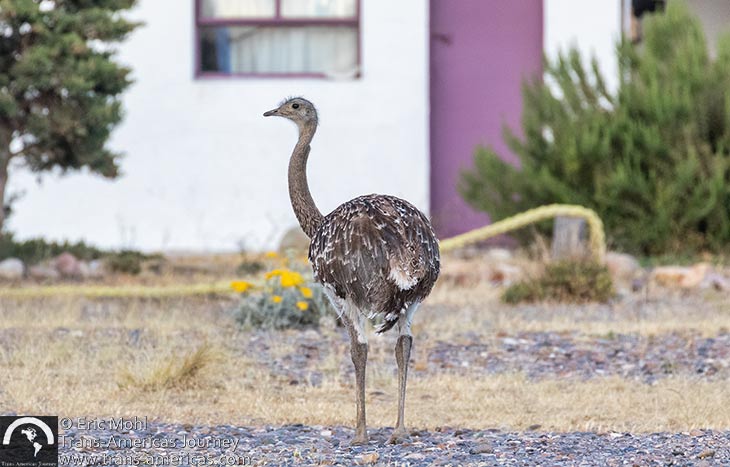
This remarkably bold rhea joined us for sunrise at Bahia Bustamante.
Eating and sleeping at Bahia Bustamante Lodge
Some original structures from the property’s days as a seaweed harvesting operation have been reimagined as shared facilities for guests at Bahia Bustamante Lodge, including an oceanfront building that’s now a communal area and restaurant.
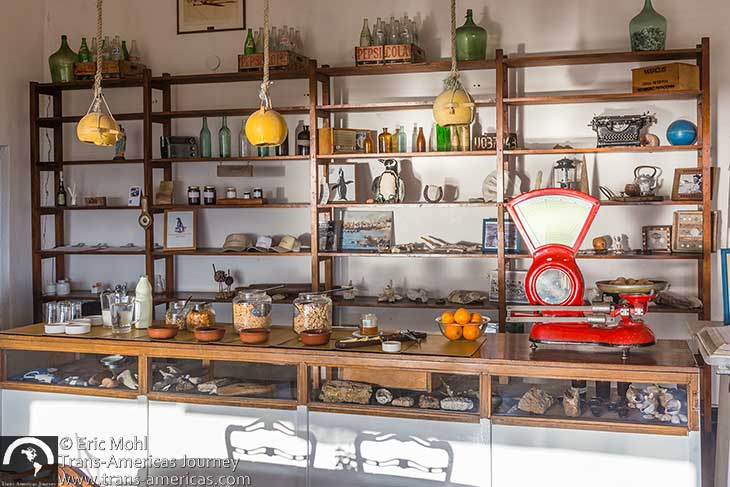
A repurposed building from the property’s days as a seaweed harvesting operation.
Rates for the four two-bedroom Sea Front cabins are all-inclusive and include all meals (minus beverages) and two tours per day (English-speaking guides are available).
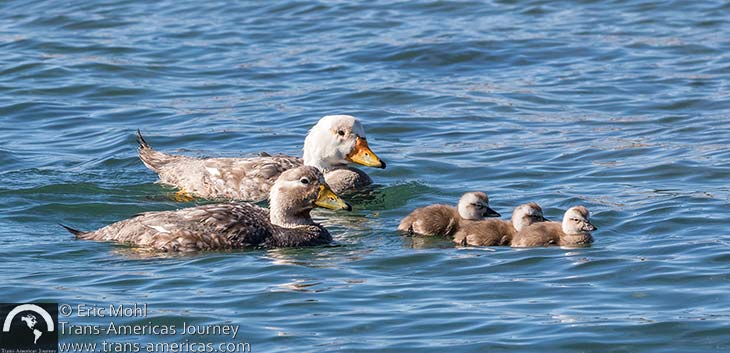
Rare flightless steamer ducks live on the Bahia Bustamante property.
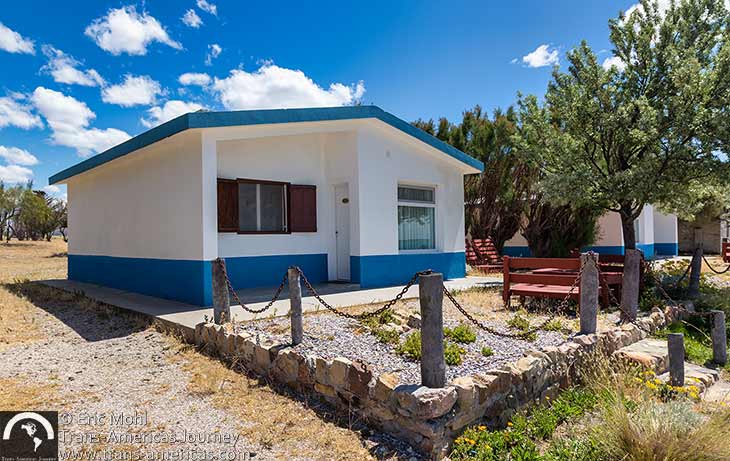
Our Sea Front cabin at Bahia Bustamante Lodge.
Rates for the four Marine Lofts are also all-inclusive. These spacious rooms offer a desk, a living room, a double-sided wood-burning stove, a small kitchen, and a modern bathroom.
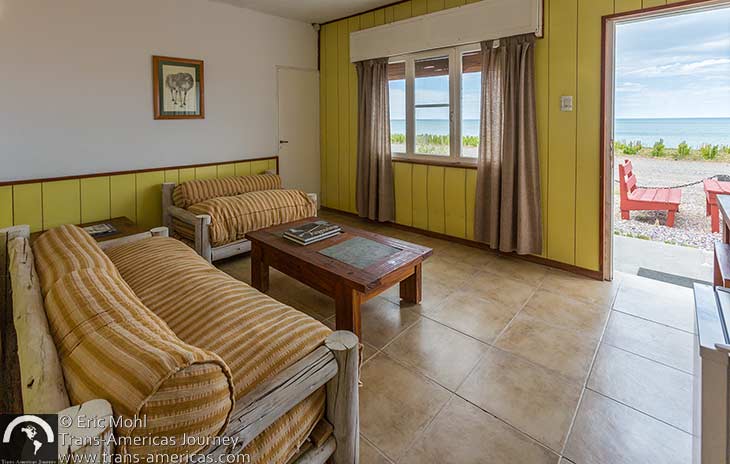
The living room in our Sea Front cabin at Bahia Bustamante Lodge.
The home of Bahia Bustamante founder Don Lorenzo Soriano has been reimagined as the Vineyard Suite. It features a large bedroom, a large living room, and a large bathroom. This room also has a private veranda with sea views and a view of the seaside vineyard. Planted in 2018 by the folks behind the innovative and irreverent Ver Sacrum winery in Mendoza, this expanding vineyard is said to be one of the southernmost in the world, and it’s planted so close to the ocean’s edge that the water nearly laps up onto the vines.
You can also book the entire “town” for large private gatherings, retreats, or celebrations.
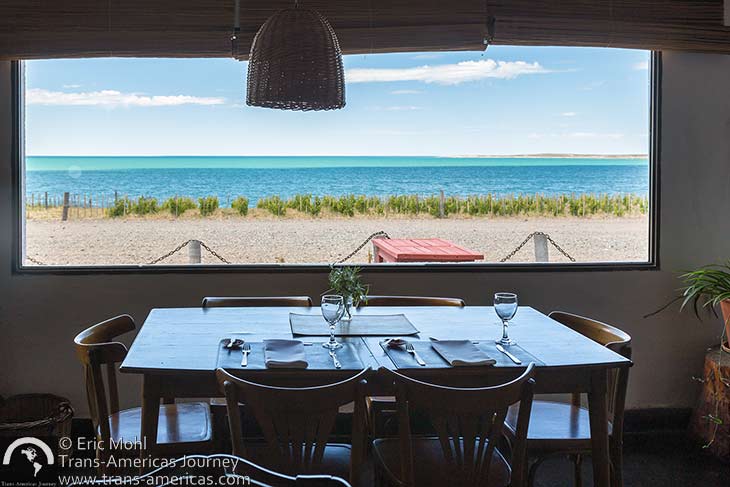
Most rates at Bahia Bustamante Lodge include three hearty meals a day and two guided tours.
Sustainability at Bahia Bustamante
Solar energy provides most of the power and hot water needs of Bahia Bustamante Lodge. Food waste is composted and used in the biodynamic garden. Grey water is used for irrigation.
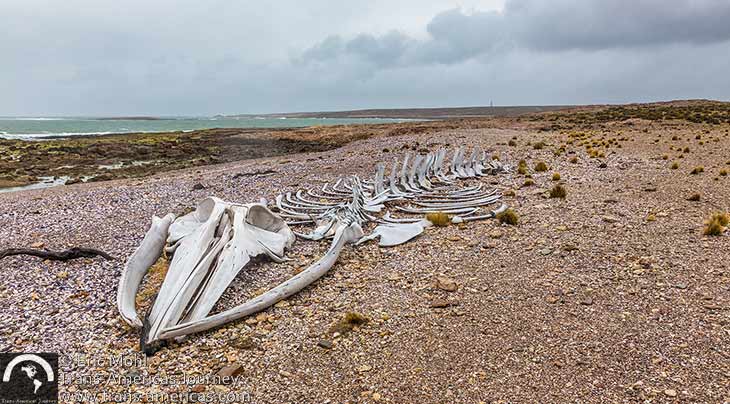
Wildlife remains, like this whale skeleton, and relics from the seaweed harvesting days are displayed in a small museum near Bahia Bustamante Lodge.
Bahia Bustamante travel tips
Bahia Bustamante is now part of Parque Patagonia Azul. Learn more about Argentina’s latest marine and land park in our full post about Parque Patagonia Azul.
Guests at Bahia Bustamante Lodge must be 10 years old or older, except those in the self-catering Steppe Cabins.
All room rates include three meals per day (minus beverages) and all activities except rates in the Steppe Cabins, which are self-catering.
Bahia Bustamante Lodge is open from October 1 through the Easter holiday each year.
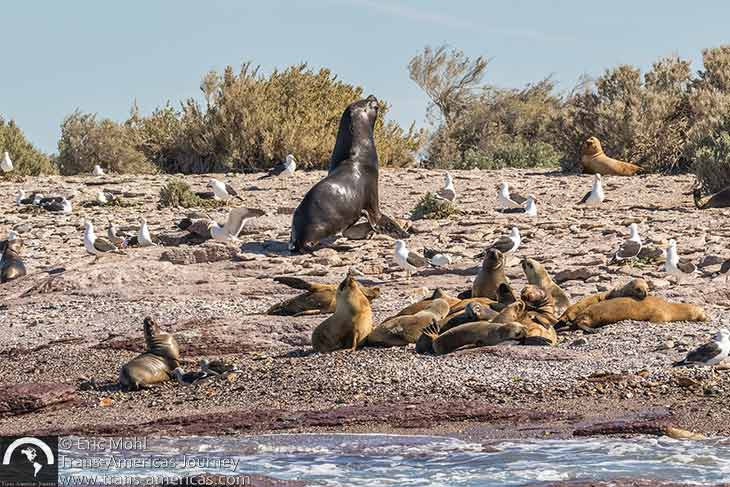
Sea lions are most abundant at Bahia Bustamante around January.
Here’s more about travel in Argentina
Here’s more about Patagonia Travel
Here’s more about Adventure Travel in the Americas