Oceanfront Patagonia – Parque Patagonia Azul, Argentina
Think of Patagonia, and you probably picture snowy peaks, glacial lakes, grazing guanacos, soaring condors, and even pumas. But there’s another Patagonia marked by coastal landscapes and marine wildlife. A large swath of oceanfront Patagonia is now protected within a marine and land reserve called Parque Patagonia Azul. Here’s how to explore the newest protected area in the Patagonia region of southern Argentina.

Parque Patagonia Azul now protects stunning landscapes and seascapes in southern Argentina.

What is Parque Patagonia Azul?
Located in Chubut Province in the Patagonia region of southern Argentina, Patagonia Azul Provincial Park was created in 2025, incorporating the Cabo Dos Bahías Protected Natural Area and the Patagonia Austral Interjurisdictional Marine Coastal Park, which were established previously. The provincial park. overseen by the government of Chubut Province, covers 729,294 acres (295,235 hectares). Nearly 100,0o acres (39,829 hectares) are terrestrial. The remaining 630,000 acres (255,306 hectares) are marine.
The reserve is roughly the size of Yosemite National Park, and includes a no-take zone within the protected waters, which local artisanal fisherpeople have supported because the protection creates a fish rookery that has improved overall fishing in the area.

We’ve seen thousands and thousands of guanacos, but the only place we’ve seen them on the beach was within Parque Patagonia Azul, the newest protected area in the Patagonia region of southern Argentina.
A core area of tourism infrastructure in the park was created on land protected and overseen by the Rewilding Argentina Foundation (formerly known as Tompkins Conservation). This includes areas around the Isla Leones entrance and the Bahia Bustamante entrance, including the Isla Leones Camps complex, the Marisma Camps complex, various campgrounds, and guided activities.
Rewilding Argentina has also created educational and immersive conservation-minded community outreach programs that benefit local communities and encourage interaction with the park.

Take a moment to do nothing at all during your visit to Parque Patagonia Azul in southern Argentina.
What can I do in Parque Patagonia Azul?
Part of the joy of visiting Parque Patagonia Azul is the chance to do nothing more than enjoy the peace and quiet and take in the natural beauty. More active endeavors include seasonal whale watching, hiking, boat excursions, snorkeling, swimming, wildlife spotting, and horseback riding.
Hiking

Short trails give hikers the chance to explore areas of coastline protected within Parque Patagonia Azul.

You’ll likely have wide-open spaces like this stretch of coastline near Marisma Camps all to yourself when you visit Parque Patagonia Azul.
Snorkeling and swimming

You’ll want a wetsuit for swimming or snorkeling through the kelp forest in the peaceful bay in front of Isla Leones Camps.
Horseback riding

Get a new perspective on the Patagonia steppe and beaches on horseback.
Interpretation center visit

One of the displays in the interpretive center that you can visit in Parque Patagonia Azul.
Boat trips
When seas and winds are calm enough, guests at Isla Leones Camps can take a boat trip (included in your casita rate) to visit Faro Isla Leones, with its infamous lighthouse, tour other offshore sights, and look for marine wildlife. Unfortunately, conditions were so windy during our stay that we never got on the boat.
Seasonal whale watching boat trips are also offered during migration season, which runs from June to December. The number of whales peaks in September and October.
Kayaking
Visitors to Isla Leones Camps and Marisma Camps can also kayak when winds and seas are calm enough.

Take a dramatic dip in naturally formed pools like this one.
Where can I stay in Parque Patagonia Azul?
Two oceanfront complexes, created and run by Rewilding Argentina, provide very comfortable basecamps with all meals and activities included. The same organization also created well-built free campgrounds that can accommodate tents and RVs.
Isla Leones Camps
Opened in 2024, Isla Leones Camps (US$250 to US$280 per person per night, including all meals, drinks, and activities) offers six very comfortable 2-person casitas built in the traditional Camarone style with corrugated metal and decorated eaves. Some casitas come with two single beds and an attached bathroom. Others provide a double bed and the use of a shared bathroom unit nearby with showers and toilets. All casitas have small patios facing the bay and screens on the windows to let in cool breezes but not the bugs. There’s no A/C and no TVs. Power is mostly solar (with a backup generator), so don’t pack your hair dryer.

Cozy casitas face the sea at Isla Leones Camps in Parque Patagonia Azul.

Inside one of the casitas at Isla Leones Camps.

Part of the scenery around Isla Leones Camps.
Get an aerial view of Isla Leones Camps and parts of Parque Patagonia Azul in our drone video below.
Marisma Camps
Opened in 2025, Marisma Camps is located about 1.5 hours on a gravel road south of Isla Leones Camps, toward Comodoro Rivadavia. Marisma is the Spanish word for marsh. This complex is so named because it’s located right next to a tidal marsh that floods with the tides. The coming and going sea water creates biodiversity that provides a resting and feeding area for fish and endemic and migratory birds.

One of the seafront casitas at Marisma Camps.

The cozy interior of our casita at Marisma Camps.

Plenty of space and views for days in the common area at Marisma Camps.

Local chef Carola Puracho works wonders with the area’s ample algae in the kitchen at Marisma Camps.
Camping in Parque Patagonia Azul
Rewilding Argentina also runs campgrounds within Parque Patagonia Azul, including Arredondo Campground. This free campground near Isla Leones Camps offers six flat tent sites with picnic tables, dry toilets, plus a communal building with heat, a table, a sofa, and a shared kitchen with a gas oven and basic utensils. The Arredondo Campground also offers two hot showers and easy access to a 1,640-foot (500-meter) trail to peaceful Arredondo Bay.

Looking down on the tent sites at the Cañadon del Sauce Campground in Parque Patagonia Azul.
The only campground that’s open all year is the oceanfront Arroyo Marea Campground. Accessed through the Bahia Bustamante entrance, this place is visited by local people who fish and spend the day or the weekend. Facilities include tent sites, fire pits, grills, composting toilets, interpretive trails, and a shelter with a communal kitchen and dining area.
RVs are welcome to park in small parking areas at each campground, including the use of campground facilities. There are no dump stations or electrical hook-ups, however.

The protected coastline and marine reserve within Parque Patagonia Azul supports ample marine life.
Bahia Bustamante Lodge
Located within park boundaries but operated independently, Bahia Bustamante offers rooms and a restaurant in buildings that were part of a seaweed-processing facility facing Bustamante Bay. Explorations of the coastal landscape are also offered, giving visitors the chance to see incredible wildlife on land and at sea, including penguins, orcas, guanacos, sea lions, giant petrels, dolphins, and much more. The wildlife diversity has prompted some to call Bahia Bustamante, which is open from October 1 through the Easter holiday, a “secret Galapagos”. Get more in our full post about exploring Bahia Bustamante.
When should I visit Parque Patagonia Azul?
Isla Leones Camps and Marisma Camps are both open from November 1 to mid-April. The provincial park itself is open from October 1 to mid-April. Bahia Bustamante is open from October 1 through Easter. And, as noted, the Arroyo Marea Campground is also open year-round.
Spring and summer months offer the mildest temperatures, but are also the windiest seasons in Patagonia (remember that South American seasons are opposite those in North America and Europe). It was so windy when we were in Parque Azul in December that we were not able to do any boat trips or kayaking, and hiking was also limited. The wind was so strong during our stay at Marisma Camps that the sea was churning, it was difficult to walk between our casita and the common building, and we had to keep our door locked to ensure it wouldn’t blow open. But wind like that is part of the adventure throughout Patagonia during South American spring and summer months.

The elements–wind, water, sun–are always close at hand in Patagonia.
Getting to Parque Patagonia Azul
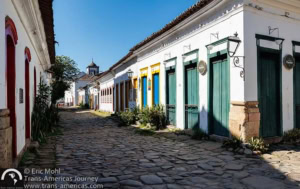
The nearest airport is in the city of Comodoro Rivadavia. Rent a car there (a 4X4 is not necessary to reach Parque Patagonia Azul), then take paved Ruta 1 (aka Ruta Azul) to the village of Camarones, 155 miles (250 km) to the north. Camarones, the oldest town in Chubut Province, is a waterfront charmer and worth a stop to admire the traditional architecture, which incorporates corrugated iron and embellished eaves.
Established as a port for exporting the region’s prized wool, Camarones was also the home of the father of former President Juan Peron (the original house was rebuilt after a fire and is now a museum). These days, Camarones is a town built on fishing and tourism. There are a handful of guesthouses and restaurants in Camarones, should you want to spend a night or two. There is also a gas station in Camarones where you can fill your tank.
From Camarones, it’s a 12-mile (20-km) drive south on a gravel road to reach Isla Leones Camps. Marisma Camps is a further 1.5 hours south along the same gravel road.
Here’s more about travel in Argentina
Here’s more about Patagonia Travel
Here’s more about Adventure Travel in the Americas