Border Crossing 101: Paso Agua Negra from Chile to Argentina
At 15,682 feet (4,780 meters), the Paso Agua Negra border between Chile and Argentina is the highest border crossing in the world (paved or unpaved). The highest paved border crossing in the world is nearby Paso San Francisco–located about 150 miles (240 km) north and just 177 feet (54 meters) lower than Paso Agua Negra. We crossed the spectacular Paso San Francisco border, however, the Paso Agua Negra border eluded us–primarily because this high-altitude border crossing is usually open for less than four months a year and our timing has never been right–until now. Welcome to the spectacular 93rd border crossing of our Trans-Americas Journey road trip which delivered narrow canyons, steep mountains splashed with mineral-rich colors, arid hillsides, green river valleys, and very high altitudes which made the journey over Paso Agua Negra a very epic drive.
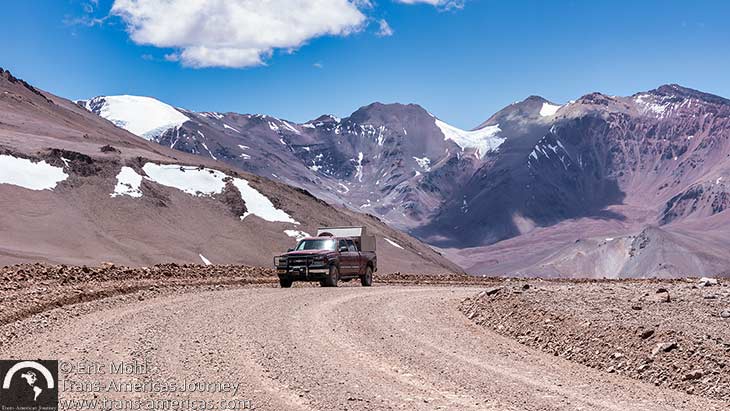
Our truck at 15,682 foot (4,780 meter) Paso Agua Negra as we crossed from Chile into Argentina.
To: San José de Jáchal, Argentina
Date: December 19, 2023
Lay of the land: Drive about 53 miles (86 km) west of Vicuña on paved Chile Ruta 41 and you’ll reach the Chilean border facilities. Past that point, the mountains close in and the hillsides steepen as the highway continues for another 18 miles (29 km) to the La Laguna Reservoir where the pavement ends (look for one of our Trans-Americas Journey stickers on the sign at the reservoir that says “Fin De Pavamiento”). After passing the reservoir, it’s a steep 31 mile (50 km) climb on gravel to Paso Agua Negra itself (look for another one of our Trans-Americas Journey stickers on a sign at the pass).
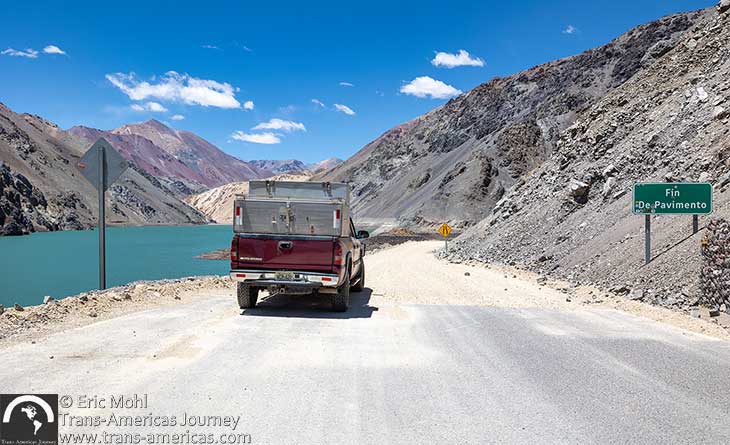
When crossing the Paso Agua Negra border from Chile into Argentina, the pavement ends at the La Laguna Reservoir.
From the Argentinean border facilities, it’s another 40 miles (61 km) to the town of San José de Jáchal passing the Cuesta del Viento and traveling through the Quebrada de Jachal (Jachal Canyon). In this stretch, the pavement was in very bad condition and the road was barely more than one lane in many places. This road is also very windy with many blind corners and narrow tunnels. Drive slowly and use your horn.
Enjoy scenes from this epic drive in the video we shot during our journey over the Paso Agua Negra border between Chile and Argentina. As usual, this drivelapse footage was taken by the Brinno camera that’s always attached to our dashboard.
Elapsed time: Though this crossing requires many hours of driving, border facilities themselves were very efficient. It took about 10 minutes to get stamped out of Chile and to have the Chilean Temporary Importation Permit (TIP) for our truck canceled. At the Argentinean border facilities, it took another 10 minutes to enter the country (remember that Argentina no longer stamps your passport) and to receive an Argentinean TIP for our truck.
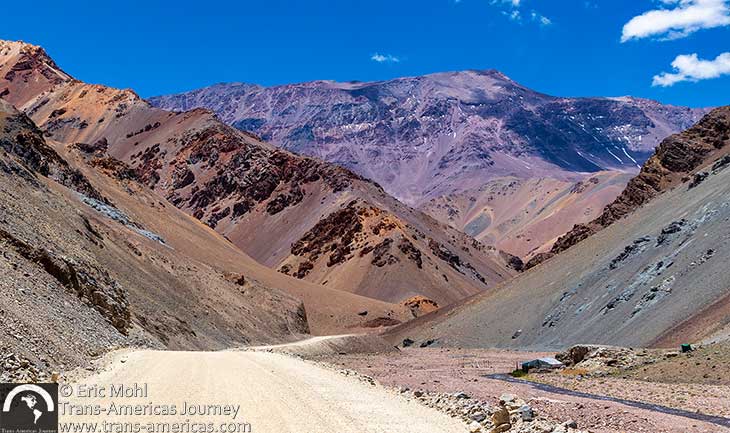
Natural minerals tint the mountains on the Chile side of Paso Agua Negra producing a rainbow of colors.
Fees: none
Services: bathrooms are available at the Chile facilities
Vehicle insurance needed: You must have third-party insurance for your vehicle to drive legally in Chile and Argentina. We bought a long-term policy that covers us in the MERCOSUR countries of Argentina, Chile, Perú, Brazil, Uruguay, Paraguay, and Bolivia. Additionally, Chile requires that drivers carry supplemental insurance called Soapex. Not all MERCOSUR policies include Soapex and you can purchase it in advance online.
Where to fill up: On the Chile side, the last place to get fuel is in the town of Vicuña. On the Argentina side, fuel is available in the town of Las Flores which is just beyond the Argentinean border facilities.
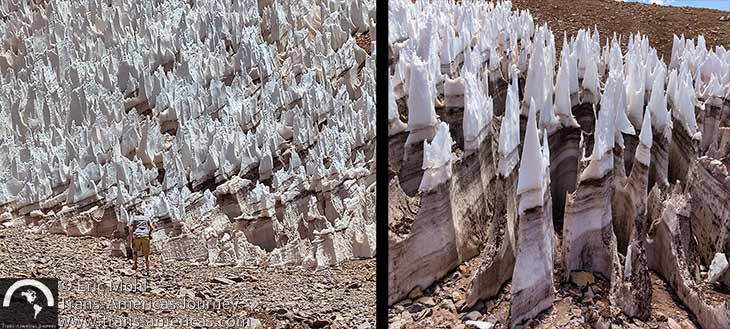
In the image on the left, Eric is dwarfed by enormous penitente ice spires at Paso Agua Negra.
Overall border rating: Scenic and swift since no cargo trucks are allowed to use the Agua Negra border and private vehicles are few and far between. The day we crossed we saw a total of nine other vehicles traveling from Chile to Argentina and we saw just four vehicles crossing in the opposite direction.
Here’s more about travel in Argentina
Here’s more about travel in Chile
Here are more Epic Drives